
Approval of Action Plan by RTHC
Date: June 12, 2025 — Last update: June 8, 2026
| Liste des sigles | List of Acronyms | ||
|---|---|---|---|
| AEC | Attestation d’études collégiales | ABSCAN | Aboriginal Savings Corporation of Canada |
| APNQL | Assemblée des Premières Nations Québec-Labrador | AEC | Attestation d’études collégiales (Attestation of school studies) |
| CDEPNQL | Commission de développement économique des Premières Nations du Québec et du Labrador | AFNQL | Assembly of First Nations Québec-Labrador |
| CNRC | Conseil national de recherches scientifiques | CMHC | Canada Mortgage and Housing Corporation |
| CoPH | Communauté de pratique en habitation | CoPH | Community of Practice in Housing |
| CRTL | Comité régional tripartite en logement | FN | First Nations |
| CSPNÉA | Conseil scolaires des Premières Nations en éducation des adultes | FNAESC | First Nations Adult Education School Council |
| DGSPNI | Direction générale de la santé des Premières Nations et des Inuits | FNQLEDC | First Nations of Quebec and Labrador Economic Development Commission |
| GEM | Garantie d’emprunt ministérielle | FNQLSDI | First Nations of Quebec and Labrador Sustainable Development Institute |
| IDDPNQL | Institut de développement durable des Premières Nations du Québec et du Labrador | FNHIB | First Nations and Inuit Health Branch |
| PoCH | Point de contact en habitation | ISC | Indigenous Services Canada |
| PN | Premières Nations | ISC QRO | Indigenous Services Canada, Quebec Regional Office |
| R&D | Recherche et développement | MLG | Ministerial Loan Guarantee |
| SAC | Services aux Autochtones Canada | NRC | National Research Council |
| SAC BRQ | Services aux Autochtones Canada, Bureau régional du Québec | PoCH | Point of Contact in Housing |
| SCHL | Société canadienne d’hypothèques et de logement | R&D | Research and development |
| SÉDAC | Société d’épargne des Autochtones du Canada | RTHC | Regional Tripartite Housing Committee |
Integration of the Draft Regional Strategy for Housing and Infrastructure and the Action Plan of the RTHC
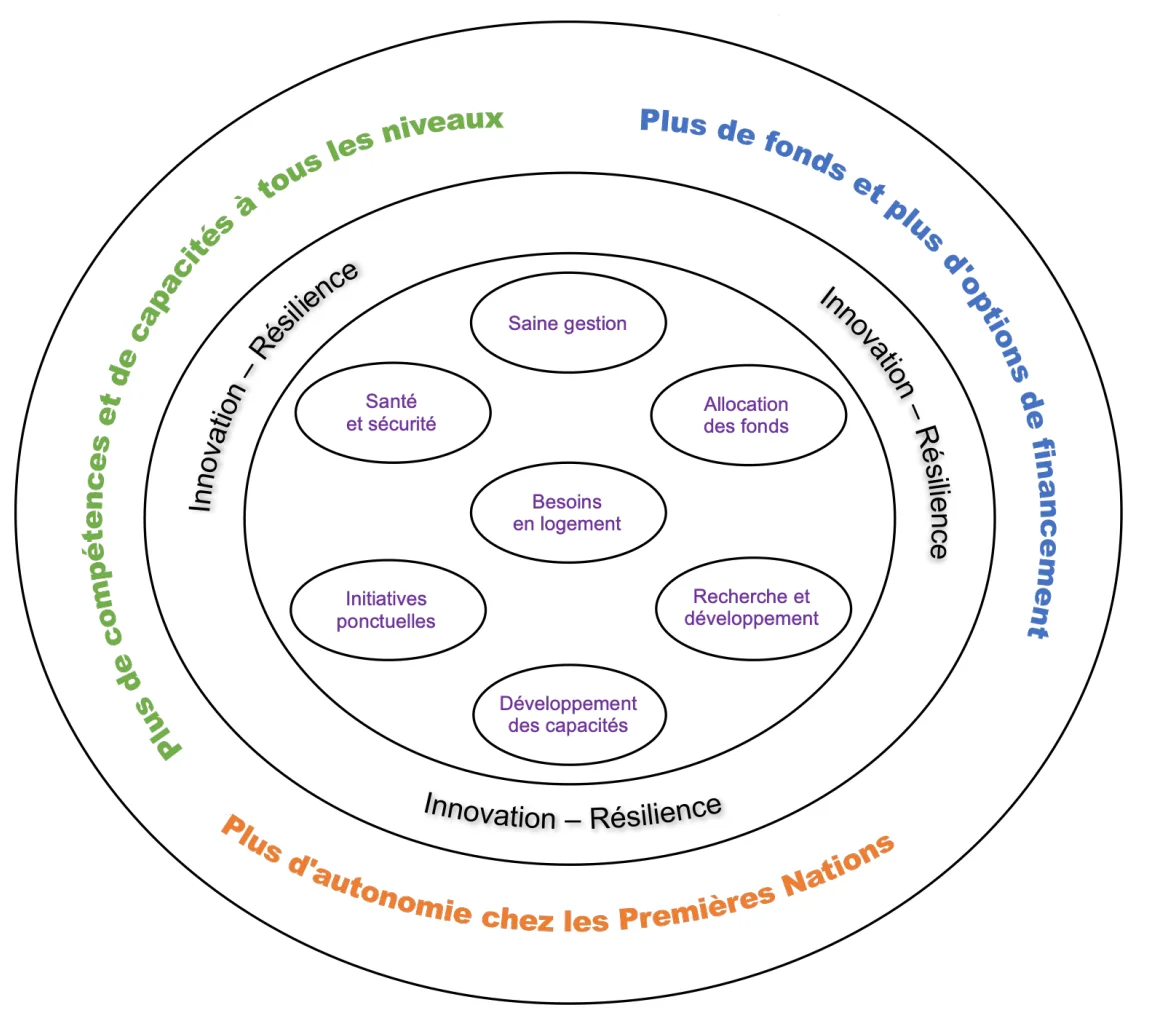
The Regional Tripartite Housing Committee (AFNQL – ISC – CMHC) is once again renewing its Action Plan since the engagement initiated in 2016 and 2017, as part of the Housing and Infrastructure Reform. The renewed Plan is aligned with the Regional Housing and Infrastructure Strategy.
Housing activity has returned to normal in the years since the pandemic. It’s more accurate to speak of a “new normal”, given the skyrocketing construction costs and the labor and procurement challenges that First Nations are facing more than ever. The Committee’s Action Plan is therefore renewed with the aim of ensuring that its actions contribute to improving the resilience of First Nations communities in Quebec to minimize the impacts of major events. The continued implementation of the Regional Housing and Infrastructure Strategy also aims to strengthen local skills and capacities to prepare the ground for closing the housing gap. The Plan, which covers the years 2025 to 2027, is in line with this.
Furthermore, the Action Plan pays special attention to the recommendations of the Auditor General of Canada’s report on Housing in First Nations Communities, which was published in 2024 https://www.canada.ca/en/auditor-general/our-work/audit-reports/parl-oag-202403-02-e.html Various actions refer to the 8 recommendations of the report. They are marked AG 2…
Component — More Skills and Capacities at all Levels, with Innovation |
|
|---|---|
|
Context Building and skills capacities is a prerequisite for better results in and around the field of housing and infrastructure. For the reform to be successful, at a minimum, players at all levels must have the required skills and capacities to carry out their roles and responsibilities. The comprehensive capacity building initiative is developed. This component is in its implementation phase for a few years now. |
Results sought (medium/long term) Leaders (elected) proficient in housing and infrastructure issues. Managers/administrators with pertinent training to carry out their functions. Occupants properly informed of their responsibilities as owners or tenants. |
| ACTIONS 2025-2027 | PERIOD | % | RESULTS / ACHIEVEMENTS | |||||||
|---|---|---|---|---|---|---|---|---|---|---|
| 2025-2026 | 2026-2027 | |||||||||
| Q1 | Q2 | Q3 | Q4 | Q5 | Q6 | Q7 | Q8 | |||
| Development of a capacity enhancement initiative | 100 % | Completed (2019) | ||||||||
| Assume an advisory and promotional role to organizations responsible for implementing ongoing capacity enhancement initiatives | 50 % | |||||||||
|
||||||||||
|
Continuously | |||||||||
|
||||||||||
|
Continuously | |||||||||
|
||||||||||
|
Continuously | |||||||||
|
||||||||||
|
Continuously | |||||||||
|
||||||||||
|
Continuously | |||||||||
|
Continuously | |||||||||
|
The Manikaso Center is back in operation after a break of several months. | |||||||||
|
Continuously | |||||||||
| Support, as needed, the development of ad hoc capacity enhancement initiatives | 50 % | |||||||||
|
||||||||||
|
Integrated work in progress | |||||||||
| Support, in a concerted way, communities in improving health and safety | 50 % | |||||||||
|
||||||||||
|
Continuously as per the needs | |||||||||
|
Continuously as per the needs | |||||||||
|
Support of ISC’s initiative by the Committee | |||||||||
|
Continuously as per the needs | |||||||||
| Support, in a concerted way, communities in the research and development of solutions adapted to the particular challenges they face | 50 % | |||||||||
|
||||||||||
|
Completed (2019) | |||||||||
|
To come | |||||||||
|
To come | |||||||||
|
To come | |||||||||
|
||||||||||
|
||||||||||
|
||||||||||
|
In progress | |||||||||
|
In progress | |||||||||
Component — More Funds and More Financing Options, with Innovation |
|
|---|---|
|
Context It is universally recognized that the level of investment must be substantially improved to achieve more positive results in housing and infrastructure. To better address First Nations needs and to eliminate disparities, it is necessary to go to a stage of catching-up supported by additional investment. In addition, more needs to be done with governmental contributions and other financing sources. One of the means to achieve this lies on the universal implementation of practices that to date, have been successful. Increases in federal contributions, optimizing leverage and implementation focused on best practices are concrete means to consider in an attempt to catch-up to better meet the needs inside and outside communities. The optimization of local economic development opportunities also represents an avenue to explore in supporting communities with their financial autonomy and job creation. Phase 1 (financial and economic analysis) is completed. The second phase, which consists of the deployment of a Center of Expertise in Financial Literacy and Housing (CEFLH), is underway. |
Results sought (medium/long term) Elimination of accumulated backlog. Implementation of best practices. |
| ACTIONS 2025-2027 | PERIOD | % | RESULTS / ACHIEVEMENTS | |||||||
|---|---|---|---|---|---|---|---|---|---|---|
| 2025-2026 | 2026-2027 | |||||||||
| Q1 | Q2 | Q3 | Q4 | Q5 | Q6 | Q7 | Q8 | |||
| Phase 1 – Financial and economic analysis | 100 % | Completed (2020) | ||||||||
| Phase 2 – Dissemination of the findings and recommendations of the first phase of financial and economic analysis (moderns financing tools, partnerships, catch-up project (on and off-community), economic benefits) | 100 % | Completed (2022) | ||||||||
| Phase 2 (cont.) – Implementation of the Center of Expertise in Financial Literacy and Housing (CEFLH), Manikaso Centre | 50 % | The Manikaso Center is back in operation after a break of several months. | ||||||||
|
In progress | |||||||||
|
In progress | |||||||||
|
Ongoing until 2027 | |||||||||
| Dissemination of information | 50 % | |||||||||
|
||||||||||
|
Shared information with FN according to their needs | |||||||||
|
Continuously | |||||||||
| Preserve Historic Regional Levels of Funding for Social Housing and Renovation | 75 % | |||||||||
|
Continuously until March 31, 2027 | |||||||||
| Make the necessary representations to justify the renewal of the ISC Housing Initiative, which expires on March 31, 2027 | ||||||||||
|
75 % | Continuously until March 31, 2027 | ||||||||
| Position the region advantageously within the new affordable housing ecosystem | ||||||||||
|
25 % | Continuously | ||||||||
| Report on housing needs | 50 % | |||||||||
|
As needed | |||||||||
|
Continuously | |||||||||
| Establishment of a common regional database for on-reserve housing stocks | ||||||||||
|
Initiated | |||||||||
|
To come | |||||||||
| Support, as needed, the development of ad hoc construction, renovation and lot servicing initiatives | 50 % | |||||||||
|
||||||||||
|
Integrated work in progress | |||||||||
Component — More First Nations Autonomy, with Innovation |
|
|---|---|
|
Context The future will prove brighter when First Nations take control of housing and infrastructure governance and implementation. First Nations want greater autonomy in the processes of interaction and decision-making that lead to addressing the housing and infrastructure challenges of their members living inside and outside communities. Steps must be taken to ensure full and complete care by the First Nations. Also, at this level, the capacity building initiatives are called upon to play a fundamental role. Greater autonomy depends on high capacity and skill sets. Incidentally, we know that the development of new programs and initiatives, planning, management support and networking are areas of responsibilities to prioritize by any eventual First Nations organization that would go beyond the scope of a local framework. It remains to be determined how responsibilities can be transferred without increasing bureaucracy. The regional observation also reveals that the communities are not all at the same point in their desire and their progress towards autonomy. Some may want more housing responsibilities in the short to medium term, while for others the outlook is longer term. It remains to be determined how to transfer responsibilities so that there is a real gain for the First Nations. The possible orientations in terms of governance depend on the results of the analysis and the progress of the other 2 components of the Strategy. At the same time, we must support the communities that want and are ready to initiate a reflection with a view to a transfer of responsibility. Moreover, the Committee’s reflection on the issue of the transfer of federal responsibilities for housing and infrastructure will be inspired, in particular, by the analysis that the AFNQL regional commissions and organizations (CORS) are undertaking on this subject. |
Results sought (medium/long term) Recognition of the full jurisdiction of the First Nations. Communities properly equipped for governance. |
| ACTIONS 2025-2027 | PERIOD | % | RESULTS / ACHIEVEMENT | |||||||
|---|---|---|---|---|---|---|---|---|---|---|
| 2025-2026 | 2026-2027 | |||||||||
| Q1 | Q2 | Q3 | Q4 | Q5 | Q6 | Q7 | Q8 | |||
| Institutional development options analysis | To come | |||||||||
|
||||||||||
|
||||||||||
|
||||||||||
|
||||||||||
|
||||||||||
| Community support | 25 % | To come | ||||||||
|
||||||||||
| Awareness of sound planning practices | 25 % | |||||||||
|
||||||||||
|
To come | |||||||||
|
Continuously | |||||||||